Commerce Experience
Gopi Fashion.
A fashion catalogue and digital commerce experience designed to simplify product discovery and customer enquiries.
- Creativity Coder
- Client-delivered
- Collaborative
02
Overview
Gopi Fashion serves retail and wholesale buyers across India. Orders used to be negotiated one chat at a time.
The platform turns that into a browsable catalogue — with search, wishlist and cart — that hands a structured order straight into the channel buyers already trust.
- Context
- Creativity Coder · Client-delivered · Collaborative
- Client
- Gopi Fashion
- Built with
- Hitarth Shah
- Contribution
- Creativity Coder engagement — architecture and commerce flows.
- Stack
Next.js 16/React 19/TypeScript/GSAP/Framer Motion
03
Problem
Every order was negotiated manually over WhatsApp. Staff sent product photos one by one, asked for sizes and wrote down dispatch addresses by hand — slow for buyers and easy to lose context.
04
Goals & requirements
- 01
No long, multi-step checkout — wholesale buyers would not complete one.
- 02
Keep WhatsApp, where the customer relationships already live.
- 03
Simple catalogue updates for fast-moving stock.
- 04
Show fabric texture, embroidery and colourways in detail.
05
My role & contribution
Delivered through Creativity Coder together with co-founder Hitarth Shah — this is shared studio work, not a solo build.
Within the studio my focus is systems architecture, backend logic, Next.js infrastructure and database design; Hitarth leads interface engineering and client workflows.
06
Technical architecture
A Next.js App Router storefront: statically generated catalogue routes, client-side cart and wishlist state, an admin area for catalogue changes, and a structured order hand-off.
- 01Buyer
- Catalogue
- Search
- Wishlist
- 02Commerce
- Cart (React context)
- Checkout
- Order serialiser
- 03Operations
- Admin area
- Catalogue data
- 04Channel
- WhatsApp sales pipeline
07
Technology stack
- Next.js 16
- React 19
- TypeScript
- GSAP
- Framer Motion
08
Engineering decisions
- 01
Serialise the cart into a message
Selected items, quantities and variants are compiled into a formatted WhatsApp order that arrives with item and size codes intact.
- 02
Static catalogue routes
Catalogue pages are prerendered so browsing never waits on the server.
- 03
Fixed image geometry
Product imagery uses fixed aspect-ratio boxes — sharp fabric detail without layout shift.
- 04
No mandatory accounts
Removing forced registration removed the biggest barrier between browsing and ordering.
09
Development challenges
- 01
Meeting buyers where they are
The system had to improve the WhatsApp workflow rather than replace it.
- 02
Catalogue churn
Fast stock turnover meant updates had to be simple enough to happen daily.
10
Interface details
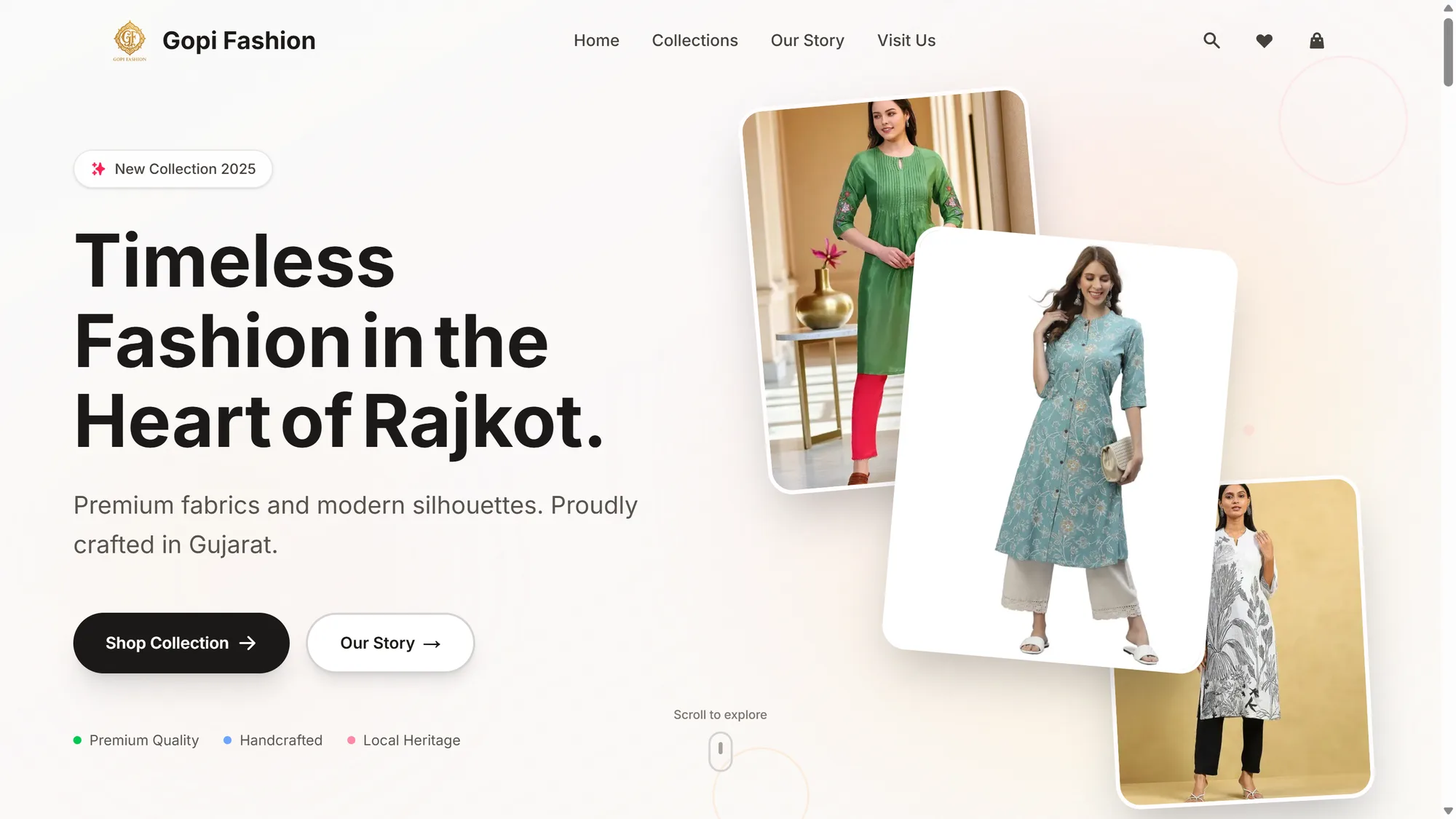
The production storefront at gopifashion.shop.
Magnified details of: Gopi Fashion storefront hero: “Timeless Fashion in the Heart of Rajkot” beside three angled photos of models wearing kurtas, with search, wishlist and bag icons in the header
11
Final implementation
Gopi Fashion is live at gopifashion.shop.
12
Results & lessons
- Average order creation
- 45s
- down from ~15-minute chats
- Dropped order context
- Zero
Lessons
- 01
The best workflow change often keeps the channel and fixes the data travelling through it.
- 02
Removing a step usually beats optimising it.
13–14
Project links
- 13Live projectgopifashion.shop(opens in a new tab)
- 14Source codePrivate — client codebase